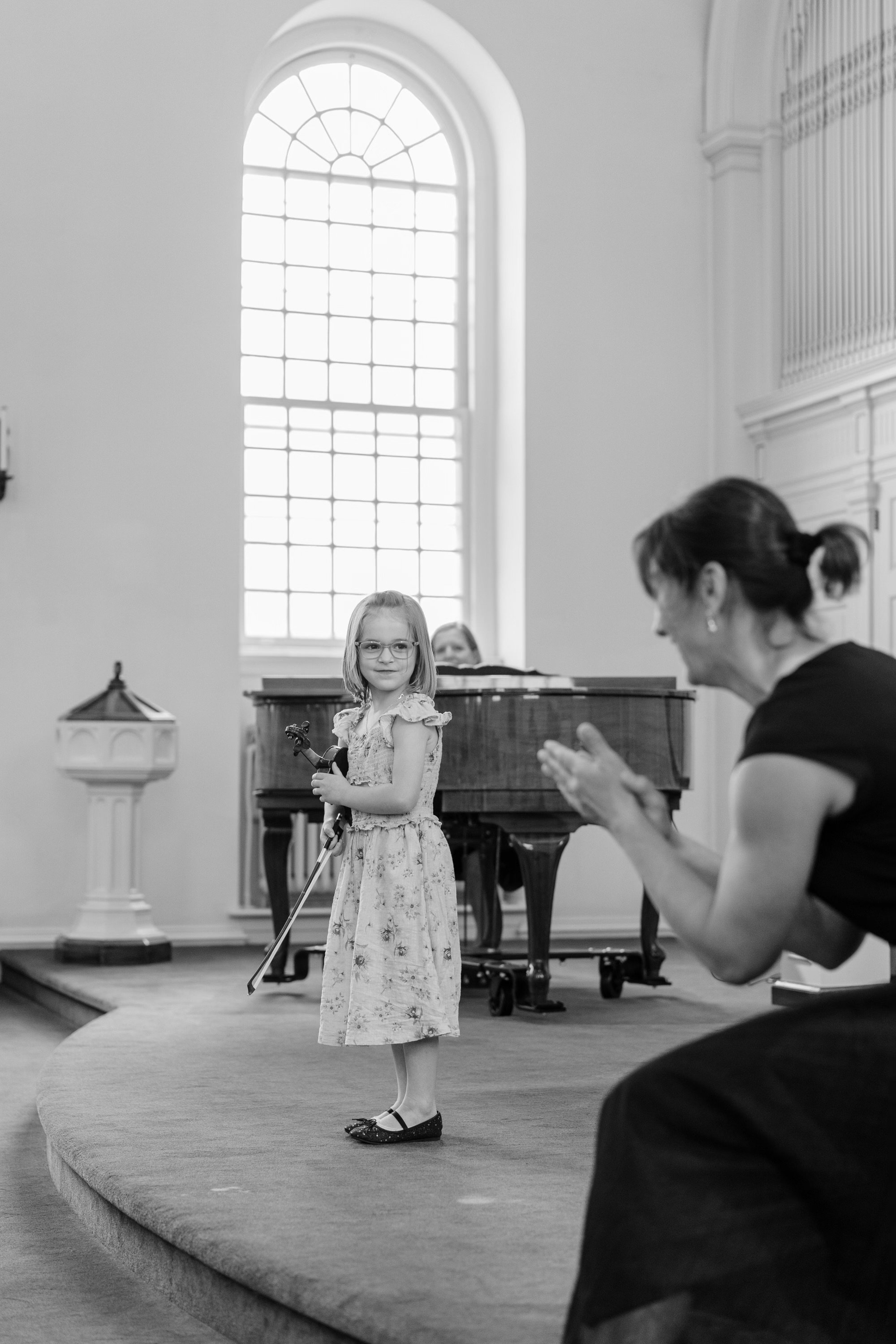
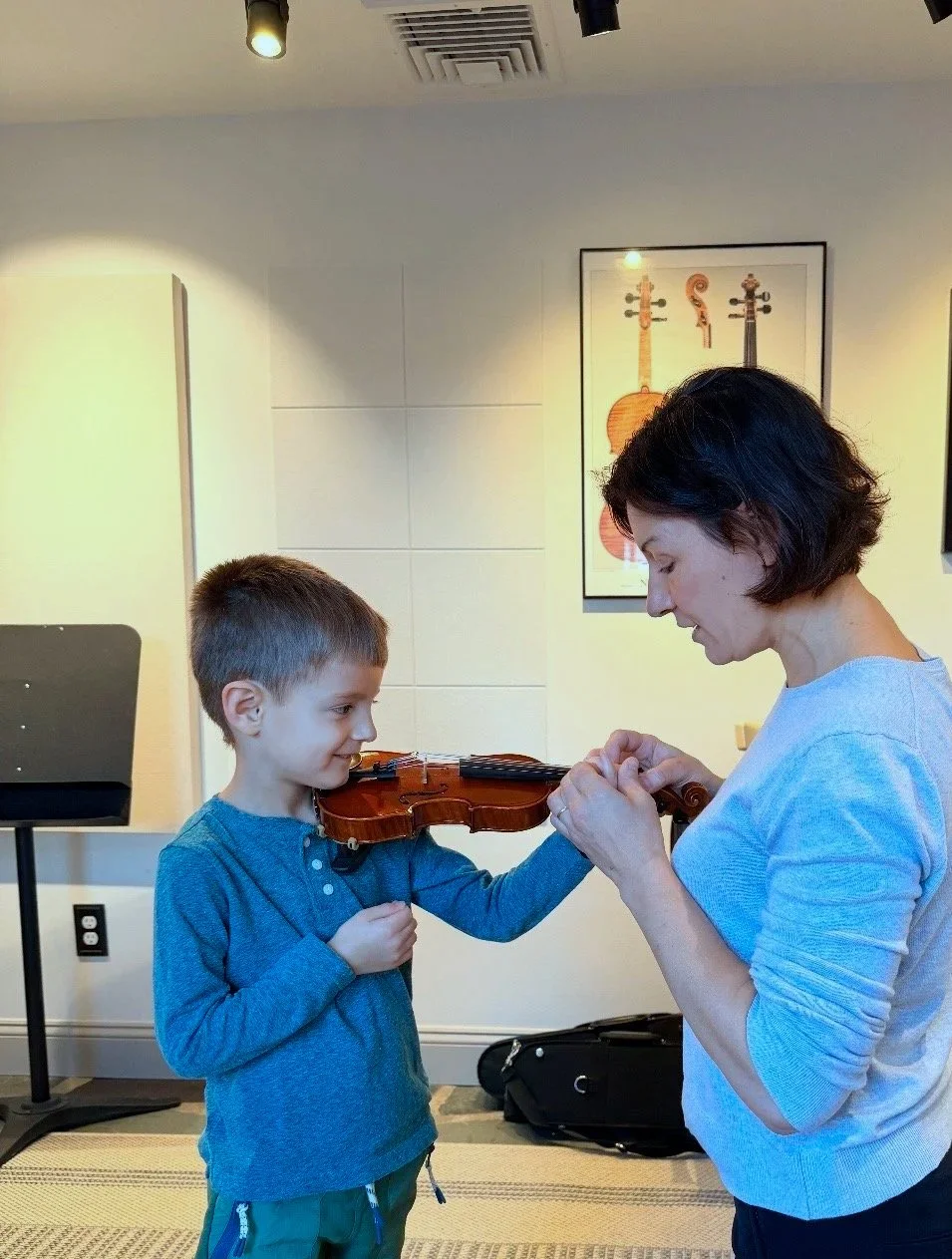
Teamwork
At the heart of the Suzuki method is a strong commitment from parents, who are asked to practice with their child every day. This daily partnership isn't always easy — some sessions will be more difficult than others, and it's natural for frustration, tears, or moments of tension to arise. These challenges, however, are part of the process. Working through them together gives families a meaningful opportunity to build patience, strengthen communication, and grow closer as a result of the shared effort.
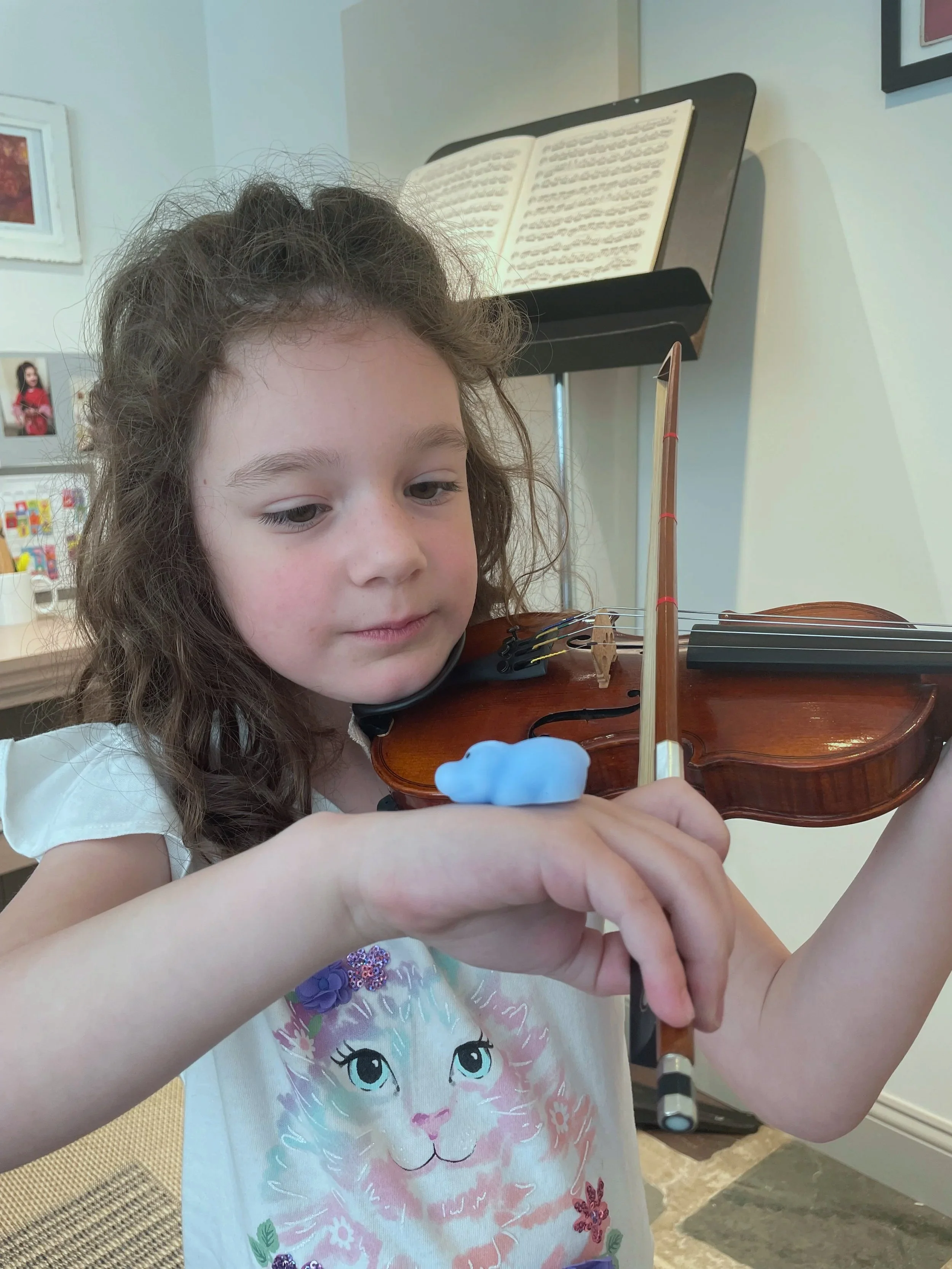
Concentration
Violin lessons present real challenges for young children. Standing still for extended periods can be difficult, and maintaining focus doesn't come naturally at first. Progress requires patience and consistent effort, but these early struggles are very much surmountable. The concentration skills children build in these formative lessons lay a foundation that serves them well far beyond the violin — supporting their success in school and other pursuits down the road.

Perseverance
The violin is a demanding instrument to master, and progress isn't always immediate. Some skills will come more naturally than others, while some will require considerably more effort to grasp. Playing beautifully is the result of sustained practice over a long period of time — there's no shortcut to it. While the learning process can feel difficult at times, it also offers children something valuable: a chance to practice pushing through challenges and, in doing so, build genuine confidence in themselves.
The Suzuki Method
Developed by Shinichi Suzuki in Japan, the Suzuki method was introduced to teachers in the United States in the late 1960’s. The method is unique in that it focuses on the involvement of the parent, repetition of pieces, listening as part of practice, and delay of music reading.
For more information, use the link below to visit the Suzuki Association of the Americas.